Blog Archive

Αλέξανδρος Γ. Σφακιανάκης

Tuesday, October 25, 2022

Second‐degree burn induced by high‐concentration topical capsaicin with mobility sequelae: a case report

alexandrossfakianakis shared this article with you from Inoreader

Abstract

High-concentration topical capsaicin is used as a second line treatment for neuropathic pain. Transient, mild burning sensation and erythema are expected adverse drug reactions. Here, we report the first case of second degree burn after the application of a high-concentration topical capsaicin patch with secondary mobility sequelae. Nine months after the application, neuropathic pain still remained and the patient described mobility difficulties in daily activities, preventing her from returning to work. This report aims to raise the question of the benefit/risk ratio of high concentration topical capsaicin.

View on Web

Effect of adhesive strategy on resin cement bonding to dentin

alexandrossfakianakis shared this article with you from Inoreader

Abstract

Objective

The cement bonding strategy and the polymerization mode can influence the prognosis of indirect restorations. The microtensile bond strength (μTBS) and dentin endogenous enzymatic activity of a dual-cure resin cement (PV5) used in combination with two dentin surface conditioners (accelerator-enhancer primer, TP or universal adhesive, UA) were evaluated.

Materials and Methods

PV5 was used to lute composite overlays after dentin treatment with TP or UA. The resin cement was self-cured, SC (1 h at 37 °C) or dual-cured, DC (20 s light-cure followed by 15 min self-cure at 37°C). The μTBS test, fractographic analysis, and the in situ zymography evaluations were performed after 24 h (T 0) or 1 yr (T 12) of artificial storage. Data were statistically analyzed (α = 0.05).

Results

TP/DC obtained the highest adhesive strengths (45 ± 9 and 36.6 ± 8), while UA/SC (17 ± 8 and 11 ± 4) the lowest, both at T 0 and T 12, respectively. DC resulted in superior bonding values than the SC, independent of the dentin surface treatment (p < 0.05). The type of adhesive, curing mode and aging influenced the gelatinolytic activity (p < 0.05).

Conclusions

The dual-cure resin cement used in combination with its accelerator-enhancer primer showed superior bonding performances with respect to universal adhesive. Dual-curing the resin cement was determinant to enhance bonding capability over time, independent of the adhesive strategy.

Clinical Relevance

Clinicians must be aware to faithfully follow manufacturer's recommendation regarding the adhesive strategy suggested with the resin cement used.

View on Web

Tone in Noise Detection in Children with a History of Temporary Conductive Hearing Loss

alexandrossfakianakis shared this article with you from Inoreader
AbstractChildren with a history of temporary conductive hearing loss (CHL) during early development may show long-term impairments in auditory processes that persist after restoration of normal audiometric hearing thresholds. Tones in noise provide a simplified paradigm for studying hearing in noise. Prior research has shown that adults with sensorineural hearing loss may alter their listening strategy to use single-channel energy cues for tone-in-noise (TIN) detection rather than rove-resistant envelope or spectral profile cues. Our objective was to determine the effect of early CHL on TIN detection in healthy children compared to controls. Children ages 4 –7 years, with and without a history of CHL due to otitis media with effusion (OME) before age 3 years, participated in a two-alte...
View on Web

Monday, October 24, 2022

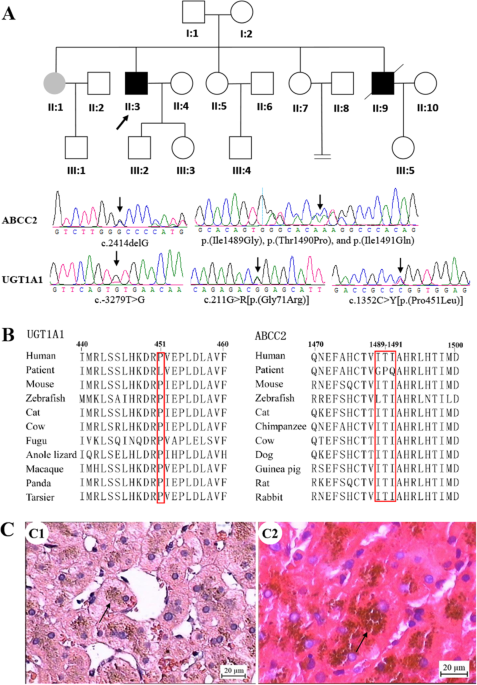
Concurrence of novel mutations causing Gilbert’s and Dubin–Johnson syndrome with poor clinical outcomes in a Han Chinese family

alexandrossfakianakis shared this article with you from Inoreader

10038_2022_1086_Fig1_HTML.png

Journal of Human Genetics, Published online: 24 October 2022; doi:10.1038/s10038-022-01086-1

Concurrence of novel mutations causing Gilbert's and Dubin–Johnson syndrome with poor clinical outcomes in a Han Chinese family
View on Web

Association between circulating 25‐hydroxyvitamin D metabolites and periodontitis: Results from the NHANES 2009‐2012 and Mendelian randomization study

alexandrossfakianakis shared this article with you from Inoreader

Abstract

Aim

This study sought to investigate associations of 25(OH)D metabolites with periodontitis, and to assess causality using Mendelian randomization (MR).

Methods

This study included 7,246 participants of the National Health and Nutrition Examination Survey, 2009–2012. The association of periodontitis with 25(OH)D metabolites was assessed using multivariable logistic regression analysis. 2-sample MR for 25(OH)D, 25(OH)D3, and C3-epi-25(OH)D3 with periodontitis (n = 17,353 cases/28,210 controls) was conducted. The principal analysis was inverse-variance-weighted approach. We controlled for horizontal pleiotropy using five additional methods.

Results

Based on the observational study, each 1-point increase in standard deviation of 25(OH)D lowered the risk of periodontitis by 15% (OR = 0.85, 95% CI: 0.78–0.93, P = 0.006) after multivariable adjustment. A similar relationship was observed between 25(OH)D3 and periodontitis (OR = 0.88, 95% CI: 0.80–0.97, P = 0.031). Furthermore, a potential nonlinear association was found between periodontitis with both 25(OH)D and 25(OH)D3. However, C3-epi-25(OH)D3 was not found to be associated with periodontitis risk. IVW-MR showed that periodontitis risk was not significantly associated with genetically increased levels of 25(OH)D (OR = 1.02, 95% CI: 0.90–1.16, P = 0.732), 25(OH)D3 (OR = 1.04, 95% CI: 0.93–1.17, P = 0.472), and C3-epi-25(OH)D3 (OR = 1.11, 95% CI: 0.87–1.41, P = 0.400). The pleiotropy-robust MR approaches yielded similar results after we had eliminated the variants with horizontal pleiotropy risk.

Conclusion

Cross-sectional observational analysis identified significant relationships between periodontitis with 25(OH)D metabolites, while findings based on MR study do not support a causal role.

This article is protected by copyright. All rights reserved.

View on Web

Sunday, October 23, 2022

Small extravesicular microRNA in head and neck squamous cell carcinoma and its potential as a liquid biopsy for early detection

alexandrossfakianakis shared this article with you from Inoreader

Abstract

Background

The objective was to assess secretion of small extracellular vesicular microRNA (exo-miRNA) in head and neck squamous cell carcinoma (HNSCC) according to human papillomavirus (HPV) status, and determine the translational potential as a liquid biopsy for early detection.

Methods

This study employed a combination of cell culture and case–control study design using archival pretreatment serum. Small extracellular vesicles (sEV) were isolated from conditioned culture media and human serum samples via differential ultracentrifugation. miRNA-sequencing was performed on each sEV isolate.

Results

There were clear exo-miRNA profiles that distinguished HNSCC cell lines from nonpathologic oral epithelial control cells. While there was some overlap among profiles across all samples, there were apparent differences in exo-miRNA profiles according to HPV-status. Importantly, differential exo-miRNA profiles were also apparent in serum from early-stage HNSCC cases relative to cancer-free controls.

Conclusions

Our findings indicate that exo-miRNA are highly dysregulated in HNSCC and support the potential of exo-miRNA as biomarkers for HNSCC.

View on Web

Expression of Glial Cell‐Derived Neurotrophic Factor Receptors Within Nucleus Ambiguus During Rat Development

alexandrossfakianakis shared this article with you from Inoreader
Expression of Glial Cell-Derived Neurotrophic Factor Receptors Within Nucleus Ambiguus During Rat Development

In this paper, we show differences of Glial Cell-Derived Neurotrophic Factor (GDNF)receptors in the nucleus ambiguus during development from E14 to E20 and in the rat adulthood. We observed that there is timing of production of the different members of GDNF receptors in the motoneurons innervating the larynx and we try to establish differences between nucleus ambiguus and the other motor nuclei of the medulla oblongata such as facial and hypoglossus nuclei. These findings support the idea that GDNF may play a role during motor innervation of the rat larynx.


Objective

The nucleus ambiguus (NAmb) is a column of neurons in the medulla oblongata, involved in bulbar functions. Expression of Glial Cell-Derived Neurotrophic Factor (GDNF) and its receptors (GDNFR) is observed within the cell bodies during reinnervation following recurrent laryngeal nerve (RLN) injury. Little is known regarding GDNFR expression in the formation of the NAmb and the laryngeal innervation during embryogenesis. Understanding the timing and pattern of GDNFR expression in embryogenesis versus after RLN injury may provide insights into therapeutic targets for regeneration after RLN injury.

Study Design

Laboratory experiment.

Methods

Rat brainstems at E14.5/E16.5/E18.5/E20.5/adult were stained for GDNFR: GFRα-1/GFRα-2/GFRα-3/Ret. Islet1 and choline acetyltransferase were used as cell body markers. Sections were observed using fluorescent microscopy and quantified through manual cell counting.

Results

Expression of GFRα-1, GFRα-3, and Ret was identified within the NAmb, hypoglossal, and facial nuclei of the adult medulla. During development, GFRα-1 immunoreactivity was seen at E20.5. GFRα-2 expression was not observed at any timepoint. GFRα-3 expression began at E16.5. Ret expression within nerve fibers in the NAmb were observed beginning at E14.5, but never in the cell bodies.

Conclusion

Embryonic GDNFR expression in the NAmb differs from that of the adult after RLN injury. The developing brainstem experienced upregulation at discrete timepoints with signaling sustained through adulthood. In contrast, adult RLN-transected rats experienced patterns of up and down regulation. GFRα-1 may contribute to muscle targeting and neuromuscular junction maturation, GFRα-3 may contribute to both, as well as axon guidance. It is likely that GDNF is functioning via a Ret-independent pathway.

Level of Evidence

NA Laryngoscope, 2022

View on Web