Blog Archive

Αλέξανδρος Γ. Σφακιανάκης

Thursday, December 3, 2020

THER-08. SGT53 – A NOVEL p53 NANOMEDICINE INDUCES SIGNIFICANT RESPONSES IN CHILDREN WITH RECURRENT MEDULLOBLASTOMA AND CHOROID PLEXUS CARCINOMA: A REPORT OF TWO CASES

Cancer shared this article with you from Inoreader

m_cover.png?Expires=1670133581&Signature

Abstract
BACKGROUND
Abnormal p53 function commonly defines high-risk CNS tumors, but functional restoration has eluded investigators. SGT-53 is a targeted nanomedicine encapsulating a plasmid DNA encoding wild-type human p53 with a transferrin receptor-targeting scFv on the nanocomplex surface resulting in efficient delivery across the BBB and robust tumor binding/uptake. Data generated by collaborators demonstrated synergy with irradiation and chemotherapy. REPORT: Two children with recurrent CNS malignancies have been treated with SGT-53, each receiving greater than 50 infusions in combination with irradiation and chemotherapy with no grade 3/4 AEs positively attributed to SGT-53. The first was an 11yo male with recurrent disseminated p53+ SHH medulloblastoma, with bulky intracranial/thoracolumbar disease. He received irradiation followed by biweekly doses of SGT-53 and temozolomide, bevacizumab and irinotecan given one week out of four. This patient exhibited a complete response of all disease on his first follow-up scan 8 weeks after therapy initiation and remained in remission for 8 months. The second patient was a 3yo male with disseminated recurrent choroid plexus carcinoma. He received CSI with SGT-53, followed by SGT-53, temozolomide and irinotecan as described above, again with no related grade 3/4 AEs. He experienced a partial response to all sites of disease and completed therapy after six months, progressing 7.8 months after initiating treatment.
CONCLUSIONS
SGT-53 was well tolerated in two heavily-pretreated patients despite aggressive combinatorial strategies. The majority of the AEs experienced were mild and manageable. Each patient had significant responses, suggesting that SGT-53 should be evaluated in a clinical trial for similar patients.
View on the web

ATRT-32. GENOME-WIDE CRISPR AND SMALL-MOLECULE SCREENS UNCOVER TARGETABLE DEPENDENCIES IN AT/RTs

Cancer shared this article with you from Inoreader

m_cover.png?Expires=1670135691&Signature

Abstract
Brain tumors ar e the leading cause of cancer-related deaths in children and adolescents. Embryonal brain tumors are a group of high-grade neoplasms which primarily affect young patients, and atypical teratoid rhabdoid tumors (AT/RTs) are the second most common type of tumor within this group. In spite of intensive research efforts and the knowledge of molecular mechanisms driving subgroup-specific heterogeneity within ATRTs, survival estimates stay relatively low as compared to other tumor entities with a median survival of around 17 months. More efficacious and durable therapies are urgently needed to improve the situation of patients. We here used a combination of genome-wide CRISPR dependency screens and small-molecule drug assays to identify genetic vulnerabilities and novel therapeutic targets for this tumor entity. Here, we successfully generated a chemical library that shows preferential activity in AT/RT cell lines, thereby validating our CRISPR approach to identify tumor-specific vulnerab ilities. Of note, none of the identified dependencies seemed to be subgroup-specific, suggesting that targets identified here can be used as pan-AT/RT therapeutic avenues. Among others, these include inhibition of EGF signaling and CDK4/6. Our data provide a comprehensive map of dependencies for AT/RTs which will serve as a starting point in the development of targeted therapies for this tumor entity.
View on the web

NURS-03. DEVELOPMENT OF A PATIENT-HELD TREATMENT SUMMARY FOR PAEDIATRIC CNS TUMOUR PATIENTS

Cancer shared this article with you from Inoreader

m_cover.png?Expires=1670133594&Signature

Abstract
BACKGROUND< /div>Following the Scottish Government Cancer Plan 2012–15(1) 'End of Treatment' summaries for paediatric oncology patients treated in SE Scotland have been successfully implemented. However, it became evident that the particular needs of patients with CNS tumours were not adequately captured on the standardised documentation.
METHODS
In view of these difficulties an alternative document was prepared specifically for this patient cohort by the multi-disciplinary team, including Nurse Specialists, Paediatric Neuro-oncology and Neuro-psychology. This was designed to be a flexible, fluid summary to be used for all such patients regardless of tumour grade or treatment modality and included those undergoing surveillance only. OUTCOMES: The document is primarily completed by the Neuro-Oncology Nurse Specialist alongside the patient and family, usually following initial treatment and is used alongside their holistic needs assessment. T he document is circulated to all involved professionals, including Primary Care, and a copy is retained by the patient. This then provides a concise source of information detailing diagnosis and treatment, any specific ongoing sequelae and details of red flag symptoms to alert patients and health professionals to the potential of relapse or other associated significant health problems. These treatment summaries are currently being piloted and have been well received thus far. They will be formally audited in due course with the aim to use nationally throughout Scotland in future.
View on the web

GCT-02. THE LONG-TERM OUTCOMES AND SEQUELAE ANALYSIS OF INTRACRANIAL GERMINOMA FROM 187 PATIENTS IN THE SINGLE INSTITUTE: NECESSITY FOR THE ADAPTATION OF RADIOTHERAPY DOSE AND VOLUME

Cancer shared this article with you from Inoreader

m_cover.png?Expires=1670135685&Signature

Abstract
PURPOSEWe aimed to refine the radiotherapy (RT) volume and dose determinant for disease failures and long-term sequelae in the intracranial germinoma.
METHODS
The main treatment for intracranial germinoma was craniospinal RT only (n=51) during 1981–1992 and RT with upfront chemotherapy (CRT) (n=152) during 1992–2015 in Seoul National University Hospital. All 187 cases were confirmed histologically. RT fields included craniospinal, whole-ventricle (WV), whole-brain (WB), and focal radiotherapy. RT dose was dependent on the M status and combination of chemotherapy. The median follow-up duration was 115 months (range, 3–358).
RESULTS
The 10-year overall and recurrence-free survival was 94.5% and 91.4%. The complete response rate after chemotherapy was 62.6%. For the patients with complete response, WV RT 16–20 Gy, and focal boost of 25–36 Gy after upfront chemotherapy showed no in-field recurrence. The causes of death were progression (n=3), 2nd malign ancy (n=6), treatment-related complications (n=7), and others (n=8). For non-sellar tumors, the rate of hormonal replacement treatment was significantly related to WB RT and WB/WV RT dose ≥ 30 Gy (p=.030, and .026). After a latency of the median 20 years, ten patients (5.3%) developed 2nd malignancy. WB RT and WB/WV dose ≥ 30 Gy were significantly correlated with the 2nd malignancy (p=.024, and .004). The rate of severe neurocognitive dysfunction was significantly associated with WB/WV dose ≥ 30 Gy (p=.027).
CONCLUSION: CONCLUSION
RT with or without upfront chemotherapy exhibits the excellent control rate of disease. However, the intensity and volume of RT are critical for managing treatment toxicities. Adaptation and further de-intensification of RT should be followed.

View on the web

QOL-46. LATE EFFECTS CARE FOR CHILDHOOD BRAIN TUMOUR SURVIVORS: A QUALITY IMPROVEMENT PROJECT

Cancer shared this article with you from Inoreader

m_cover.png?Expires=1670133603&Signature

Abstract
BACKGROUND< /div>Childhood and adolescent brain tumor survivors are at risk for considerable late morbidity and mortality from their disease and the treatment they receive. Surgery, chemotherapy, radiation therapy and tumor location all have the potential to impact the physical, psychological, functional and social health of these survivors. Comprehensive late effects care may mitigate these risks, but the necessary elements of this care model is unclear. We describe a quality-improvement initiative to improve the long-term follow-up (LTFU) care provided to brain tumour survivors at the McMaster Children's Hospital.
METHODS
An anonymous needs assessment circulated to health providers was used to evaluate the LTFU practices. Utilizing this feedback as well as the LTFU guidelines from the Children's Oncology Group a care plan was made for these survivors.
RESULTS
17 of 33 (52%) health care staff responded to the survey, this included 70% physicians or nurse practitioners, an d 30% nurses and allied health staff. Improvements suggested included consistent inclusion of additional care providers (i.e. social work, dietitians, endocrinology) reported by 76%, as well as a need for improved patient education and surveillance for late effects of therapy.
CONCLUSION
Treatment summaries with surveillance care plans and LTFU resources were created for all survivors of childhood brain tumours at risk of treatment-related complications. Late effects counselling with distribution of these materials is ongoing as part of this quality improvement initiative. To provide comprehensive management, a neuro-oncology specific late effects programs with multi-disciplinary support is essential for the care of brain tumour survivors.
View on the web

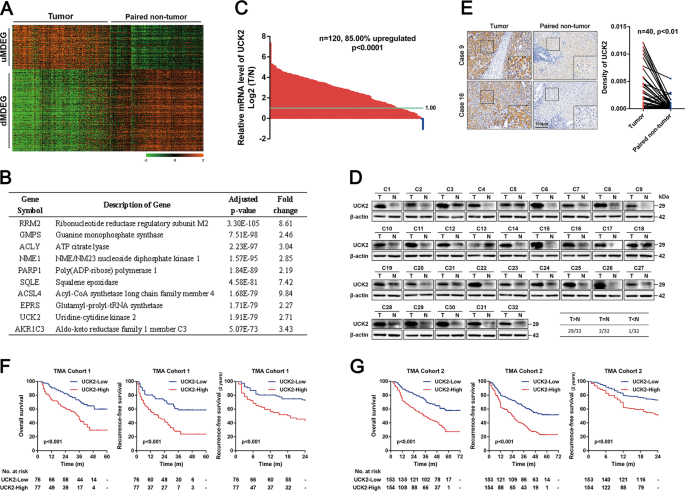
Non-metabolic role of UCK2 links EGFR-AKT pathway activation to metastasis enhancement in hepatocellular carcinoma

Cancer shared this article with you from Inoreader

41389_2020_287_Fig1_HTML.png

View on the web

DIPG-26. THERAPEUTIC EFFECTS OF RADIOTHERAPY WITH CONCOMITANT AND ADJUVANT TEMOZOLOMIDE VERSUS RADIOTHERAPY WITH CONCOMITANT TEMOZOLOMIDE ALONE IN CHILDREN WITH DIPG: A SINGLE-CENTER EXPERIENCE WITH 82 CASES

Cancer shared this article with you from Inoreader

m_cover.png?Expires=1670135687&Signature

Abstract
OBJECTIVE< /div>To retrospectively analyze the therapeutic effects of radiotherapy with concomitant and adjuvant temozolomide versus radiotherapy with concomitant temozolomide alone for pediatric diffuse intrinsic pontine glioma (DIPG), and to evaluate the value of temozolomide in the treatment of pediatric DIPG.
METHODS
The clinical data of children with confirmed DIPG in Guangdong Sanjiu Brain Hospital between January 1, 2010 and December 30, 2019 were collected. The inclusive criteria included (1) receiving a total radiotherapy dose of 54 Gy in 27 fractions, (2) treated with concomitant temozolomide chemotherapy, and (3) with or without adjuvant temozolomide chemotherapy.
RESULTS
A total of 82 pediatric patients were eligible for the study, with a median age of 7 years (range 2–16 years). The median follow-up was 8.6 months (range 2–28 months) and the median survival time was 9.4 months. The median survival time of 66 patients tr eated with radiotherapy with concomitant and adjuvant temozolomide was 9.8 months, longer than 7.5 months of the other 16 patients treated with radiotherapy with concomitant temozolomide alone, with statistical differences (P=0.010). Moreover, bevacizumab and nimotuzumab didn't bring survival benefits to patients with disease recurrence or progression. Hematological toxicity (Grade IV) was not found.
CONCLUSION
Radiotherapy with concomitant and adjuvant temozolomide prolongs the survival time of children with DIPG.
View on the web