Blog Archive

Αλέξανδρος Γ. Σφακιανάκης

Wednesday, January 4, 2023

Contribution of genotypes in Prothrombin and Factor V Leiden to COVID‐19 and disease severity in patients at high risk for hereditary thrombophilia

alexandrossfakianakis shared this article with you from Inoreader

abstract

Aim

Thrombotic and microangiopathic effects have been reported in COVID-19 patients. This study examined the contribution of the hereditary thrombophilia factors Prothrombin (FII) and Factor V Leiden (FVL) genotypes to the severity of COVID-19 disease and the development of thrombosis.

Methods

This study investigated FII and FVL alleles in a cohort of 9508 patients (2606 male and 6902 female) with thrombophilia. It was observed that 930 of these patients had been infected by SARS-CoV-2 causing COVID-19. The demographic characteristics of the patients and their COVID-19 medical history were recorded. Detailed clinical manifestations were analyzed in a subset of cases (n=4092). This subgroup was age and gender matched. FII and FVL frequency data of healthy populations without thrombophilia risk were obtained from Bursa Uludag University Medical Genetic Department's Exome Databank.

Results

The ratio of males (31.08%; 27.01%) and the mean age (36.85 ±15.20; 33.89±14.14) were higher among COVID-19 patients compared to non-COVID-19 patients. The prevalence of FVL and computerized tomography (CT) positivity in COVID-19 patients was statistically significant in the thrombotic subgroup (p<0.05). FVL prevalence, CT positivity rate, history of thrombosis, and Pulmonary thromboembolism complication were found to be higher in deceased COVID-19 patients (p<0.05). Disease severity was mainly affected by Factor V Leiden and not related to genotypes at the Prothrombin mutations.

Conclusion

Overall, disease severity and development of thrombosis in COVID-19 are mainly affected by the variation within the FVL gene. Possible FVL mutation should be investigated in COVID-19 patients and appropriate treatment should be started earlier in FVL-positive patients.

This article is protected by copyright. All rights reserved.

View on Web

Integrative systems immunology uncovers molecular networks of the cell cycle that stratify COVID‐19 severity

alexandrossfakianakis shared this article with you from Inoreader

Abstract

Several perturbations in the number of peripheral blood leukocytes, such as neutrophilia and lymphopenia associated with Coronavirus disease 2019 (COVID-19) severity, point to systemic molecular cell cycle alterations during severe acute respiratory syndrome coronavirus-2 (SARS-CoV-2) infection. However, the landscape of cell cycle alterations in COVID-19 remains primarily unexplored. Here, we performed an integrative systems immunology analysis of publicly available proteome and transcriptome data to characterize global changes in the cell cycle signature of COVID-19 patients. We found significantly enriched cell cycle-associated gene co-expression modules and an interconnected network of cell cycle-associated differentially expressed proteins (DEPs) and genes (DEGs) by integrating the molecular data of 1,469 individuals (981 SARS-CoV-2 infected patients and 488 controls [either healthy controls or individuals with other respiratory illnesses]). Among these DEPs and DEGs are seve ral cyclins (CCNs), cell division cycles (CDCs), cyclin-dependent kinases (CDKs), and mini-chromosome maintenance (MCMs) proteins. COVID-19 patients partially shared the expression pattern of some cell cycle-associated genes with other respiratory illnesses but exhibited some specific differential features. Notably, the cell cycle signature predominated in the patients' blood leukocytes (B, T, and NK cells) and was associated with COVID-19 severity and disease trajectories. These results provide a unique global understanding of distinct alterations in cell cycle-associated molecules in COVID-19 patients, suggesting new putative pathways for therapeutic intervention.

This article is protected by copyright. All rights reserved.

View on Web

Birth weight, gestational age and risk of cardiovascular disease in early adulthood: Influence of familial factors

alexandrossfakianakis shared this article with you from Inoreader
Abstract
The association between intrauterine growth restriction (IUGR) and cardiovascular disease (CVD) later in life might be confounded by familial factors. We conducted a bi-national register-based cohort study to assess associations of birthweight for gestational age (GA), a proxy for IUGR, and GA with CVD risk in early adulthood, before and after addressing familial factors via sibling comparison. We included 3,410,334 live non-malformed singleton births in Sweden (1973-1996) and Denmark (1978-1998). During a median follow-up of 10 years from age 18 onwards, 29,742 individuals developed incident CVD (hypertensive, ischemic heart, and cerebrovascular diseases). Compared with individuals born with appropriate birthweight for GA (AGA, 10th-90th percentiles) or full term (39-40 gestational weeks), individuals born severely small for GA (SGA, <3rd percentile) or preterm (22-36 weeks) were at increased risk of CVD [HRs (95% CIs): 1.38 (1.32-1.45) and 1 .31 (1.25-1.38), respectively]. The association was attenuated when comparing individuals born SGA with their AGA siblings (1.11, 0.99-1.25), but remained robust when comparing individuals born preterm with their term siblings (1.21, 1.07-1.37). Our findings suggest that both SGA and preterm birth are associated with CVD risk in early adulthood, with greater familial confounding noted for SGA.
View on Web

Tuesday, January 3, 2023

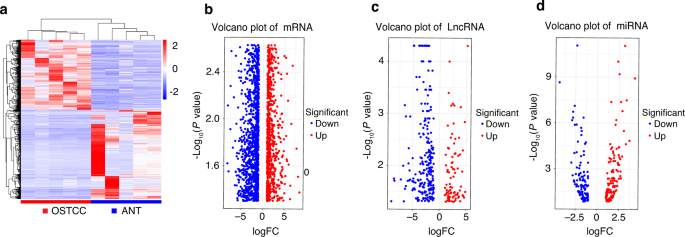
Mutation-associated transcripts reconstruct the prognostic features of oral tongue squamous cell carcinoma

alexandrossfakianakis shared this article with you from Inoreader

41368_2022_210_Fig1_HTML.png

International Journal of Oral Science, Published online: 03 January 2023; doi:10.1038/s41368-022-00210-3

Mutation-associated transcripts reconstruct the prognostic features of oral tongue squamous cell carcinoma
View on Web

Automating the treatment planning process for 3D‐conformal pediatric craniospinal irradiation therapy

alexandrossfakianakis shared this article with you from Inoreader

Abstract

Purpose

Pediatric patients with medulloblastoma in low- and middle-income countries (LMICs) are most treated with 3D-conformal photon craniospinal irradiation (CSI), a time-consuming, complex treatment to plan, especially in resource-constrained settings. Therefore, we developed and tested a 3D-conformal CSI autoplanning tool for varying patient lengths.

Methods and materials

Autocontours were generated with a deep learning model trained:tested (80:20 ratio) on 143 pediatric medulloblastoma CT scans (patient ages: 2–19 years, median = 7 years). Using the verified autocontours, the autoplanning tool generated two lateral brain fields matched to a single spine field, an extended single spine field, or two matched spine fields. Additional spine subfields were added to optimize the corresponding dose distribution. Feathering was implemented (yielding nine to 12 fields) to give a composite plan. Each planning approach was tested on six patients (ages 3–10 years). A pediatric radiation oncologist assessed clinical acceptability of each autoplan.

Results

The autocontoured structures' average Dice similarity coefficient ranged from .65 to .98. The average V95 for the brain/spinal canal for single, extended, and multi-field spine configurations was 99.9% ± 0.06%/99.9% ± 0.10%, 99.9% ± 0.07%/99.4% ± 0.30%, and 99.9% ± 0.06%/99.4% ± 0.40%, respectively. The average maximum dose across all field configurations to the brainstem, eyes (L/R), lenses (L/R), and spinal cord were 23.7 ± 0.08, 24.1 ± 0.28, 13.3 ± 5.27, and 25.5 ± 0.34 Gy, respectively (prescription = 23.4 Gy/13 fractions). Of the 18 plans tested, all were scored as clinically acceptable as-is or clinically acceptable with minor, time-efficient edits preferred or required. No plans were scored as clinically unacceptable.

Conclusion

The autoplanning tool successfully generated pediatric CSI plans for varying patient lengths in 3.50 ± 0.4 minutes on average, indicating potential for an efficient planning aid in a resource-constrained settings.

View on Web

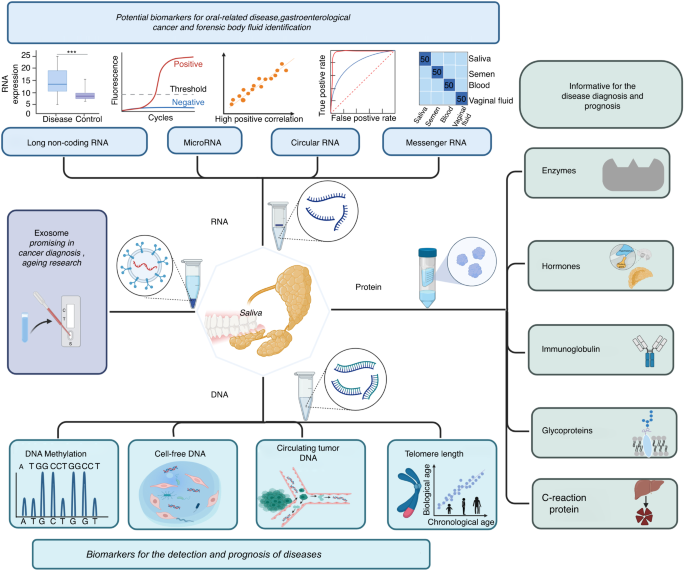
Promising applications of human-derived saliva biomarker testing in clinical diagnostics

alexandrossfakianakis shared this article with you from Inoreader

41368_2022_209_Fig1_HTML.png

International Journal of Oral Science, Published online: 04 January 2023; doi:10.1038/s41368-022-00209-w

Promising applications of human-derived saliva biomarker testing in clinical diagnostics
View on Web

Temporal Trends in Variability of Respirable Dust and Respirable Quartz Concentrations in the European Industrial Minerals Sector

alexandrossfakianakis shared this article with you from Inoreader
Abstract
While between- and within-worker variability have been studied quite extensively, hardly any research is available that examines long-term trends in the variability of occupational exposure. In this first study on trends in occupational exposure variability temporal changes in the variability of respirable dust and respirable quartz concentrations within the European industrial minerals sector were demonstrated. Since 2000 the European Industrial Minerals Association's Dust Monitoring Program (IMA-DMP) has systematically collected respirable dust and respirable quartz measurements. The resulting IMA-DMP occupational exposure database contains at present approximately 40 000 personal full-shift measurements, collected at 177 sites owned by 39 companies, located in 23 European countries. Repeated measurements of workers performing their duties within a specific site-job-campaign combination allowed estimation of within- and between-worker variabi lity in exposure concentrations. Overall day-to-day variability predominated the between-worker variability for both respirable dust concentrations and quartz concentrations. The within-worker variability in concentrations by job was two to three times higher for respirable quartz than for respirable dust. The median between-worker variability in respirable dust concentrations was low and further reduced over time. For quartz concentrations the same phenomenon albeit somewhat less strong was observed. In contrast, for the within-worker variability in concentrations downward and upward temporal trends were apparent for both respirable dust and respirable quartz. The study shows that the (relative) size of temporal variability is large and unpredictable and therefore regular measurement campaigns are needed to ascertain compliance to occupational exposure limit values.
View on Web