Blog Archive

Αλέξανδρος Γ. Σφακιανάκης

Monday, May 30, 2022

Firearm trauma: Race and insurance influence mortality and discharge disposition

alexandrossfakianakis shared this article with you from Inoreader
imageBACKGROUND Health insurance and race impact mortality and discharge outcomes in the general trauma population. It remains unclear if disparities exist by race and/or insurance in outcomes following firearm injuries. The purpose of this study was to assess differences in mortality and discharge based on race and insurance status following firearm injuries. METHODS The National Trauma Data Bank (2007–2016) was queried for firearm injuries by International Classification of Diseases, Ninth/Tenth Revision, Ecodes. Patients with known discharge disposition, age (18–64 years), race, and insurance were included in analysis (N = 120,005). To minimize bias due to missing data, we used multiple imputation for variables associated with outcomes following traumatic injury: Injury Severity Score, Glasgow Coma Scale score, respiratory rate, systolic blood pressure, and sex. Multivariable regression analysis was additionally adjusted for age, sex, Injury Severity Score, intent, Glasgow Coma Scale score, systolic blood pressure, heart rate, respiratory rate, year, and clustered by facility to assess differences in mortality and discharge disposition. RESULTS The average age was 31 years, 88.6% were male, and 50% non-Hispanic Blacks. Overall mortality was 11.5%. Self-pay insurance was associated with a significant increase in mortality rates in all racial groups compared with non-Hispanic Whites with commercial insurance. Hispanic commercial, Medicaid, and self-pay patients were significantly less likely to discharge with posthospital care compared with commercially insured non-Hispanic Whites. When examining racial differences in mortality and discharge by individual insurance types, commercially insured non-Hispanic Black and other race patients were significantly less likely to die compared with similarly insured non-Hispanic White patients. Regardless of race, no significant differences in mortality were observed in Medicaid or self-pay patients compared with non-Hispanic White patients. CONCLUSION Victims of firearm injuries with a self-pay insurance status have a significantly higher rate of mortality. Hispanic patients regardless of insurance status were significantly less likely to discharge with posthospital care compared with non-Hispanic Whites with commercial insurance. Continued efforts are needed to understand and address the relationship between insurance status, race, and outcomes following firearm violence. LEVEL OF EVIDENCE Prognostic and epidemiologic, Level IV.

View on Web

AAST multicenter prospective analysis of prehospital tourniquet use for extremity trauma

alexandrossfakianakis shared this article with you from Inoreader
imageBACKGROUND Tourniquet use for extremity hemorrhage control has seen a recent increase in civilian usage. Previous retrospective studies demonstrated that tourniquets improve outcomes for major extremity trauma (MET). No prospective study has been conducted to date. The objective of this study was to evaluate outcomes in MET patients with prehospital tourniquet use. We hypothesized that prehospital tourniquet use in MET decreases the incidence of patients arriving to the trauma center in shock. METHODS Data were collected prospectively for adult patients with MET at 26 Level I and 3 Level II trauma centers from 2015 to 2020. Limbs with tourniquets applied in the prehospital setting were included in the tourniquet group and limbs without prehospital tourniquets were enrolled in the control group. RESULTS A total of 1,392 injured limbs were enrolled with 1,130 tourniquets, including 962 prehospital tourniquets. The control group consisted of 262 limbs without prehospital tourniquets and 88 with tourniquets placed upon hospital arrival. Prehospital improvised tourniquets were placed in 42 patients. Tourniquets effectively controlled bleeding in 87.7% of limbs. Tourniquet and control groups were similarly matched for demographics, Injury Severity Score, and prehospital vital signs (p > 0.05). Despite higher limb injury severity, patients in the tourniquet group were less likely to arrive in shock compared with the control group (13.0% vs. 17.4%, p = 0.04). The incidence of limb complications was not significantly higher in the tourniquet group (p > 0.05). CONCLUSION This study is the first prospective analysis of prehospital tourniquet use for civilian extremity trauma. Prehospital tourniquet application was associated with decreased incidence of arrival in shock without increasing limb complications. We found widespread tourniquet use, high effectiveness, and a low number of improvised tourniquets. This study provides further evidence that tourniquets are being widely and safely adopted to improve outcomes in civilians with MET. LEVEL OF EVIDENCE Therapeutic/Care Management; Level IV.
View on Web

The public health burden of geriatric trauma: Analysis of 2,688,008 hospitalizations from Centers for Medicare and Medicaid Services inpatient claims

alexandrossfakianakis shared this article with you from Inoreader
imageBACKGROUND Geriatric trauma care (GTC) represents an increasing proportion of injury care, but associated public health research on outcomes and expenditures is limited. The purpose of this study was to describe GTC characteristics, location, diagnoses, and expenditures. METHODS Patients at short-term nonfederal hospitals, 65 years or older, with ≥1 injury International Classification of Diseases, Tenth Revision, were selected from 2016 to 2019 Centers for Medicare and Medicaid Services Inpatient Standard Analytical Files. Trauma center levels were linked to Inpatient Standard Analytical Files data via American Hospital Association Hospital ID and fuzzy string matching. Demographics, care location, diagnoses, and expenditures were compared across groups. RESULTS A total of 2,688,008 hospitalizations (62% female; 90% White; 71% falls; mean Injury Severity Score, 6.5) from 3,286 hospitals were included, comprising 8.5% of all Medicare inpatient hospitalizations. Level I centers encompassed 7.2% of the institutions (n = 236) but 21.2% of hospitalizations, while nontrauma centers represented 58.5% of institutions (n = 1,923) and 37.7% of hospitalizations. Compared with nontrauma centers, patients at Level I centers had higher Elixhauser scores (9.0 vs. 8.8) and Injury Severity Score (7.4 vs. 6.0; p
View on Web

Factors associated with limitation of care after fatal injury

alexandrossfakianakis shared this article with you from Inoreader
imageBACKGROUND There is variability in end-of-life care of trauma patients. Many survive resuscitation but die after limitation of care (LoC). This study investigated LoC at a level I center. METHODS Adult trauma deaths between January 2016 and June 2020 were reviewed. Patients were stratified into "full code" versus any LoC (i.e., do not resuscitate, no escalation, or withdrawal of care) and by timing to LoC. Emergency department and "brain" deaths were excluded. Unadjusted logistic regression and Cox proportional hazards were used for analyses. Results include n (%) and odds ratios (ORs) with 95% confidence intervals (CIs), with α = 0.05. RESULTS A total of 173 patients were included; 15 patients (8%) died full code and 158 (91%) died after LoC. Seventy-seven patients (48%) underwent incremental LoC. Age (OR, 1.05; 95% CI, 1.02–1.08; p = 0.0010) and female sex (OR, 3.71; 95% CI, 1.01–13.64; p = 0.0487) increased the odds of LoC; number of anatomic injuries (OR, 0.91; 95% CI, 0.85–0.98; p = 0.0146), chest injuries (Abbreviated Injury Scale [AIS] score chest, >3) (OR, 0.02; 95% CI, 0.01–0.26; p = 0.0021), extremity injury (AIS score, >3) (OR, 0.08; 95% CI, 0.01–0.64; p = 0.0170), and hospital complications equal to 1 (OR, 0.21; 95% CI, 0.06–0.78; p = 0.0201) or ≥2 (OR, 0.19; 95% CI, 0.04–0.87; p = 0.0319) decreased the odds of LoC. For those having LoC, final limitations were implemented in
View on Web

Are burns a chronic condition? Examining patient reported outcomes up to 20 years after burn injury—A Burn Model System National Database investigation

alexandrossfakianakis shared this article with you from Inoreader
imageBACKGROUND People living with burn injury often face long-term physical and psychological sequelae associated with their injuries. Few studies have examined the impacts of burn injuries on long-term health and function, life satisfaction, and community integration beyond 5 years postinjury. The purpose of this study was to examine these outcomes up to 20 years after burn injury. METHODS Data from the Burn Model System National Longitudinal Database (1993–2020) were analyzed. Patient-reported outcome measures were collected at discharge (preinjury status recall) and 5 years, 10 years, 15 years, and 20 years after injury. Outcomes examined were the SF-12/VR-12 Physical Component Summary and Mental Component Summary, Satisfaction with Life Scale, and Community Integration Questionnaire. Trajectories were developed using linear mixed models with repeated measures of outcome scores over time, controlling for demographic and clinical variables. RESULTS The study population included 421 adult burn survivors with a mean age of 42.4 years. Lower Physical Component Summary scores (worse health) were associated with longer length of hospital stay, older age at injury and greater time since injury. Similarly, lower Mental Component Summary scores were associated with longer length of hospital stay, female sex, and greater time since injury. Satisfaction with Life Scale scores decrease negatively over time. Lower Community Integration Questionnaire scores were associated with burn size and Hispanic/Latino ethnicity. CONCLUSION Burn survivors' physical and mental health and satisfaction with life worsened over time up to 20 years after injury. Results strongly suggest that future studies should focus on long-term follow-up where clinical interventions may be necessary. LEVEL OF EVIDENCE Prognostic and Epidemiologic; Level III.
View on Web

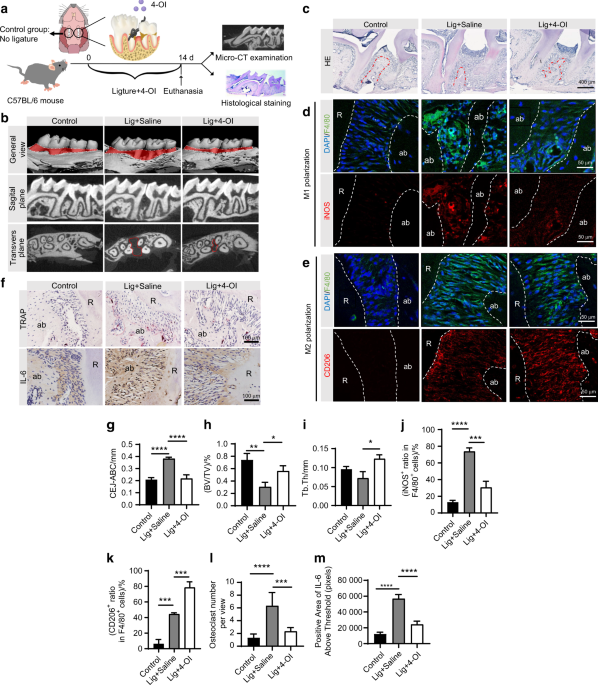
Four-Octyl itaconate ameliorates periodontal destruction via Nrf2-dependent antioxidant system

alexandrossfakianakis shared this article with you from Inoreader

41368_2022_177_Fig1_HTML.png

View on Web

Sunday, May 29, 2022

Long-term results of slide laryngotracheoplasty for congenital subglottic stenosis in newborns and infants

alexandrossfakianakis shared this article with you from Inoreader

1-s2.0-S0165587622X00050-cov150h.gif

Publication date: July 2022

Source: International Journal of Pediatric Otorhinolaryngology, Volume 158

Author(s): Eszter Erdélyi, Ádám Bach, Balázs Sztanó, Péter Gál, Kishore Sandu, Csaba Bereczki, László Rovó

View on Web