Blog Archive

Αλέξανδρος Γ. Σφακιανάκης

Sunday, April 10, 2022

Long-term Exposure to Fine Particulate Matter and Mortality A Longitudinal Cohort Study of 400,459 Adults

alexandrossfakianakis shared this article with you from Inoreader
imageBackground: Cohort studies on the association between long-term exposure to fine particulate matter (PM2.5) and mortality have been well established for America and Europe, but limited and inconsistent in Asia with much higher air pollution. This study aims to investigate the associations between ambient PM2.5 and all-cause and cause-specific mortality over a period of rising and then declining PM2.5. Methods: We enrolled a total of 400,459 adults from an open cohort between 2001 and 2016, and followed them up until 31 May 2019. We obtained mortality data from the National Death Registry maintained by the Ministry of Health and Welfare in Taiwan. We estimated ambient PM2.5 exposures using a satellite-based spatiotemporal model. We performed a Cox regression model with time-dependent covariates to investigate the associations of PM2.5 with deaths from all causes and specific causes. Results: This study identified 14,627 deaths and had a total of 5 million person–years of follow-up. Each 10 µg/m3 increase in PM2.5 was associated with an increased hazard risk of 29% (95% confidence interval: 24%–35%) in all-cause mortality. Risk of death increased by 30% for natural causes, 20% for cancer, 42% for cardiovascular disease (CVD) causes, and 53% for influenza and pneumonia causes, for each 10 µg/m3 increase in PM2.5. Sensitivity analyses generally yielded similar results. Conclusion: Long-term exposure to ambient PM2.5 was associated with increased risks of all-cause mortality and deaths from cancers, natural causes, CVD, and influenza and pneumonia. Longitudinal study design should be encouraged for air pollution epidemiologic investigation.
View on the web

Detection of human herpes virus 6 DNA and chromosomal integration after allogeneic hematopoietic stem cell transplantation: a retrospective single center analysis

alexandrossfakianakis shared this article with you from Inoreader

Abstract

Introduction

Human herpes virus 6 (HHV-6) can reactivate after allogeneic hematopoietic stem cell transplantation (allo-HSCT) and may be associated with significant morbidity and mortality.

Methods

The epidemiology of HHV-6 infections and their impact on outcome after allo-HSCT were retrospectively analyzed in 689 adult allo-HSCT recipients (January 2015-December 2018). Chromosomal integration of HHV-6 (ciHHV-6) in the donor was retrospectively investigated to critically evaluate antiviral treatment strategies.

Results

HHV-6 DNA in any specimen was found in 89 patients. HHV-6 infections (encephalitis (1), gastroenteritis (44), dermatitis (2), hepatitis (1) or pneumonitis (5)) were diagnosed in 53/689 patients (7.7%). Elevated levels of HHV-6 DNA were found in 38 patients (5.5%). CiHHV-6, analyzed in patients with HHV-6 viral loads ≥104 copies/mL, was identified in 4 patients (10/38 patients; 10.5%). Two of those displayed copy numbers of HHV-6 ranging from ≥ 2 × 10⁵ to 2.5 × 10⁶ copies/mL (HHV-6A). Here, ciHHV-6 was integrated into donor and not into the patients' cells. In this series of allo-HSCT recipients, 10.5% of patients with blood viral loads of HHV-6 showed ciHHV-6.

Conclusion

Screening of the donor for chromosomal integration of HHV-6 (ciHHV-6) before initiation of antiviral therapy is recommended.

This article is protected by copyright. All rights reserved

View on the web

The detrimental impact of temporomandibular disorders (mis)beliefs and possible strategies to overcome

alexandrossfakianakis shared this article with you from Inoreader

Summary

Aim

This topical review presents common patients' misbeliefs about temporomandibular disorders (TMD) and discusses their possible impact on the diagnosis, treatment and prognosis. We also discussed the possible influence of the beliefs and behaviors of health care providers on the beliefs of patients with TMD and present possible strategies to overcome the negative impacts of such misbeliefs.

Methods

This topical review was based on a non-systematic search for studies about the beliefs of patients and professionals about TMD in PubMed and Embase.

Results

Patients' beliefs can negatively impact the diagnosis, treatment, and prognosis of TMD. These beliefs can be modulated by several factors such as culture, psychosocial aspects, gender, level of knowledge, and previous experiences. Moreover, primary health care professionals, including dentists, may lack sufficient experience and skills regarding TMD diagnosis and treatment. Misbeliefs of the health care professionals can be based on outdated evidence that is not supported by rigorous methodological investigations. Education and dissemination of knowledge to patients and the general population are effective for prevention, promotion of health and disruption of the cycle of misinformation and dissemination of misbeliefs.

Conclusion

The lack of basic information about TMD and the dissemination of mistaken and outdated concepts may delay the diagnosis, hinder the treatment, and consequently increase the risk of worsening the condition. Education is key to overcome TMD misbeliefs.

View on the web

Influence of buccal emergence profile designs on peri‐implant tissues: A randomized controlled trial

alexandrossfakianakis shared this article with you from Inoreader

Abstract

Background

The prosthetic emergence profile design might be an important factor in postsurgical mucosal recession etiology. Therefore, a restorative buccal emergence profile designed correctly might reduce gingival margin recession.

Purpose

To compare the marginal gingival level and the width/height (W/H) ratio between two profile configurations of single implant-supported restorations at molar sites.

Materials and Methods

Twenty-one patients requiring a single mandibular molar tooth replacement with supracrestal mucosal thickness ≥2 mm were recruited and randomly assigned to a prosthesis buccal emergence profile design based on the buccal mucosal W/H ratio (Test Group) or maintained the original emergence profile of the healing abutment (Control Group). Assessments were made before delivery of the definitive restoration (T0), at prosthesis placement (T1), one (T2), and 12 (T3) months after loading. The gingival margin level change (△GM), initial emergence angle, buccal mucosal W/H ratio, marginal bone loss (MBL), implant failure, and complications were assessed.

Results

The gingival recession in the test group (0.13 ± 0.32 mm) was significantly lower than in the control group (0.63 ± 0.38 mm) at T3 (p = 0.006). The initial emergence angle in the test group (31.4 ± 7.22 degrees) was significantly lower than the control group (40.0 ± 7.60 degrees) (p = 0.025). The W/H ratio in the test group at T2 was significantly higher than at T0 but remained stable thereafter. The W/H ratio presented a continued rising trend in the control group.

Conclusions

When the initial supracrestal soft tissue thickness was ≥2 mm, a restorative emergence profile based on the W/H ratio significantly reduced gingival margin recession. An emergence angle of 32.4 degrees showed better behavior in maintaining the gingival margin than 40 degrees.

Clinical Trial Registration Number

ChiCTR190002210.

View on the web

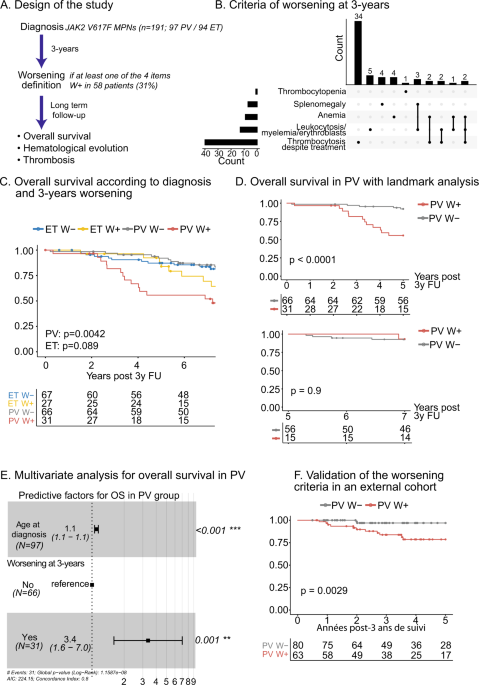
JAK2 V617F polycythemia vera and essential thrombocythemia: dynamic clinical features associated with long-term outcomes

alexandrossfakianakis shared this article with you from Inoreader

41408_2022_646_Fig1_HTML.png

Blood Cancer Journal, Published online: 08 April 2022; doi:10.1038/s41408-022-00646-0

JAK2 V617F polycythemia vera and essential thrombocythemia: dynamic clinical features associated with long-term outcomes
View on the web

Syphilisinfektion im HNO-Bereich

alexandrossfakianakis shared this article with you from Inoreader

lro-1026_10-1055-a-1808-7321-1.jpg

Laryngorhinootologie
DOI: 10.1055/a-1808-7321

Die Anzahl der gemeldeten Syphilis-Fälle steigt seit Jahren an. Die sexuell übertragbare Erkrankung wird durch die Spirochäte Treponema pallidum Subspezies pallidum verursacht und verläuft hierbei in verschiedenen Stadien. In allen Stadien können hierbei Symptome im HNO-Bereich auftreten. Hierdurch ist bei passenden Symptomen eine Syphilis-Infektion als Differenzialdiagnose vom HNO-Arzt stets zu bedenken. So ist bei zunehmendem oralem Geschlechtsverkehr der Primäraffekt/harter Schanker zunehmend häufig im Mundraum zu beobachten. Zudem können Symptome nicht nur im Mundraum, sondern auch im Bereich des Ohrs, der Nase, des Larynx sowie auch zervikal und fazial auftreten. Die Diag nose wird hierbei über den direkten Erregernachweis oder über einen serologischen Nachweis gesichert. Die Spirochäte ist nicht kultivierbar. Der therapeutische Goldstandard ist die Gabe von Benzathin-Penicillin G oder Procain-Penicillin G. Als Alternative stehen Doxycyclin, Makrolide oder Ceftriaxon zur Verfügung. Bei einer Innenohr- oder Hirnnervenbeteiligung ist die zusätzliche Gabe eines Glukokortikoids zu empfehlen. Vor Durchführung der antibiotischen Therapie ist der Patient über die Möglichkeit einer Jarisch-Herxheimer-Reaktion aufzuklären. Bei einer Syphilis-Infektion ist stets eine kollegiale Zusammenarbeit mit den Venerologen zu empfehlen, sodass eine effektive und umfassende Diagnostik und Therapie erfolgen kann.
[...]

Georg Thieme Verlag KG Rüdigerstraße 14, 70469 Stuttgart, Germany

Article in Thieme eJournal s:
Table of contents  |  Abstract  |  Full text

View on the web

Spirulina supplementation prevents exercise‐induced lipid peroxidation, inflammation and skeletal muscle damage in elite rugby players

alexandrossfakianakis shared this article with you from Inoreader

Abstract

Objective

This study aimed to examine the effects of spirulina supplementation on pro/antioxidant status, inflammation, and skeletal muscle damage markers immediately and 24h after exhaustive exercise in elite rugby players.

Methods

Seventeen elite male Rugby Union players were randomly assigned to a Spirulina (SPI: n=9), or a placebo group (PLA: n=8) in a double-blind design. Subjects were supplemented with Spirulina platensis (5.7 g/d) or placebo (isoproteic and caloric) for 7 weeks. At baseline (W0) and after seven weeks of supplementation (W7), blood samples were obtained before (T0), immediately after (T1), and 24h after (T2) exhaustive exercise. The Yoyo Intermittent Recovery Test Level 2 was used as an exhaustive exercise to induce oxidative stress (OS), inflammation, and skeletal muscle damage. The studied parameters included Pro/antioxidant status markers (SOD, GPX, GSH/GSSG ratio, ox-LDL, and F2-Isop), inflammation markers (MPO and CRP), and skeletal muscle damage markers (LDH and CK).

Results

Our results showed that F2-Isop, CRP, and CK levels significantly increased at T1 only in PLA group (p<0.05, p<0.05, and p<0.001 respectively) with no change in SPI group which reflects the effect of spirulina to prevent lipid peroxidation, inflammation, and skeletal muscle damage induced by exhaustive exercise. Moreover, spirulina supplementation accelerated the return to baseline values given that F2-Isop, CRP, and CK levels at T2 were significantly lower than at T0 in SPI group (p<0.05, p<0.01, and p<0.001 respectively).

Conclusion

Based on the markers used in this study, our results report that spirulina supplementation potentially prevents exercise-induced lipid peroxidation, inflammation, skeletal muscle damage and may accelerate the recovery of some of these markers. Based on our findings, we recommend spirulina supplementation especially for athletes who do not achieve the recommended antioxidant dietary intake and who perform a high training load in order to reduce the magnitude of OS, inflammation, and skeletal muscle damage which could help to reduce performance losses and accelerate recovery after training/competitions throughout the season.

This article is protected by copyright. All rights reserved.

View on the web