Blog Archive

Αλέξανδρος Γ. Σφακιανάκης

Sunday, November 15, 2020

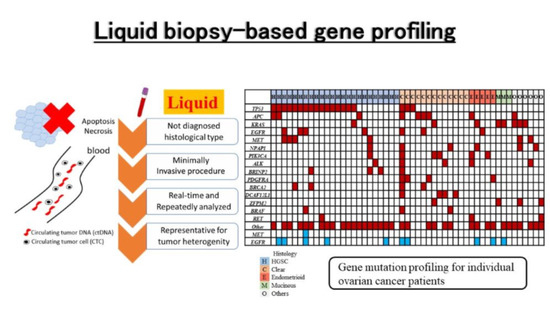
Cancers, Vol. 12, Pages 3382: Comprehensive Gene Mutation Profiling of Circulating Tumor DNA in Ovarian Cancer: Its Pathological and Prognostic Impact

Alexandros G.Sfakianakis shared this article with you from Inoreader
Μέσω Cancers

cancers-12-03382-ag-550.jpg

Cancers, Vol. 12, Pages 3382: Comprehensive Gene Mutation Profiling of Circulating Tumor DNA in Ovarian Cancer: Its Pathological and Prognostic Impact

Cancers doi: 10.3390/cancers12113382

Authors: Tomoko Noguchi Naoyuki Iwahashi Kazuko Sakai Kaho Matsuda Hitomi Matsukawa Saori Toujima Kazuto Nishio Kazuhiko Ino

Liquid biopsies from circulating tumor DNA (ctDNA) have been employed recently as a non-invasive diagnostic tool for detecting cancer-specific gene mutations. Here, we show the comprehensive gene mutation profiles of ctDNA in 51 patients with different histological subtypes of stage I–IV ovarian cancer, and their association with clinical outcomes. The ctDNA extracted from pre-treatment patients’ plasma were analyzed using Cancer Personalized Profiling by Deep Sequencing targeting 197 genes. Of 51 patients, 48 (94%) showed one or more non-synonymous somatic mutations, including TP53 (37.3%), APC (17.6%), KRAS (15.7%), EGFR (13.7%), MET (11.8%), PIK3CA (11.8%), NPAP1 (11.8%), and ALK (9.8%). The most frequently mutated genes were as follows: TP53 in high-grade serous carcinoma (66.7%), APC in clear cell carcinoma (30.8%), PIK3CA in endometrioid carcinoma (40%), and KRAS in mucinous carcinoma (66.7%). Higher cell-free (cf)DNA concentration significantly correlat ed with worse progression-free survival (PFS) in all patients as well as stage III–IV patients (p = 0.01 and 0.005, respectively). Further, patients with any pathogenic mutations showed significantly worse PFS (p = 0.048). Blood tumor mutational burden detected from ctDNA did not significantly correlate with the histological subtypes or survival. Collectively, clinico-genomic profiles of individual ovarian cancer patients could be identified using ctDNA and may serve as a useful prognostic indicator. These findings suggest that ctDNA-based gene profiling might help in establishing personalized therapeutic strategies.

View on the web

Thursday, November 12, 2020

The Influence of Weight-Related Self-Esteem and Symptoms of Depression on Shape and Weight Concerns and Weight-Loss 12 Months After Bariatric Surgery

alkiviadis.1961 shared this article with you from Inoreader

11695.jpg

Abstract

Introduction

While body image can improve following bariatric surgery, a portion of patients continue to experience concerns about weight and shape regardless of weight lost. Research is needed to identify risk factors for post-surgical weight and shape concerns given that body dissatisfaction may contribute to poor outcomes.

Aims

To evaluate whether (1) change in weight-related self-esteem and symptoms of depression from pre- to 12-month post-surgery were associated with change in weight and shape concerns independent of weight-loss; (2) improvement in weight and shape concerns, symptoms of depression, and/or weight-related self-esteem predict greater weight-loss 12 months after bariatric surgery; and (3) improvements in weight-related self-esteem, symptoms of depression, weight concerns, or shape concerns predict weight loss.

Methods

Fifty adults approved to receive bariatric surgery self-reported body mass index and completed validated measures of weight-related self-esteem, symptoms of depression, and weight and shape concerns pre- and 12-month post-surgery.

Results

Improvements were observed for weight-related self-esteem, concerns over shape and weight, symptoms of depression, and body mass index from pre- to 12-month post-surgery. Improvement in weight-related self-esteem was associated with concomitant improvements in concerns over shape and weight, independent of weight loss. Improvement in symptoms of depression was associated with improvement in concerns over weight, but not shape. Finally, exploratory analyses indicated that improvements in weight-related self-esteem, and concerns over shape and weight, but not symptoms of depression were associated with improvement in weight-loss.

Conclusions

Weight-related self-esteem may represent an overlooked and important target throughout the bariatric surgery process that could enhance surgical outcomes.

View on the web

A human secretome library screen reveals a role for Peptidoglycan Recognition Protein 1 in Lyme borreliosis

alkiviadis.1961 shared this article with you from Inoreader

journal.ppat.1009030.g008&size=inline

by Akash Gupta, Gunjan Arora, Connor E. Rosen, Zachary Kloos, Yongguo Cao, Jiri Cerny, Andaleeb Sajid, Dieuwertje Hoornstra, Maryna Golovchenko, Natalie Rudenko, Ulrike Munderloh, Joppe W. Hovius, Carmen J. Booth, Christine Jacobs-Wagner, Noah W. Palm, Aaron M. Ring, Erol Fikrig

Lyme disease, the most common vector-borne illness in North America, is caused by the spirochete Borrelia burgdorferi. Infection begins in the skin following a tick bite and can spread to the hearts, joints, nervous system, and other organs. Diverse host responses influence the level of B. burgdorferi infection in mice and humans. Using a systems biology approach, we examined potential molecular interactions between human extracellular and secreted proteins and B. burgdorferi. A yeast display library expressing 1031 human extracellular proteins was probed against 36 isolates of B. burgdorferi sensu lato. We found that human Peptidoglycan Recognition Protein 1 (PGLYRP1) interacted with the vast majority of B. burgdorferi isolates. In subsequent experiments, we demonstrated that recombinant PGLYRP1 interacts with purified B. burgdorferi peptidoglycan and exhibits borreliacidal activity, suggesting that vertebr ate hosts may use PGLYRP1 to identify B. burgdorferi. We examined B. burgdorferi infection in mice lacking PGLYRP1 and observed an increased spirochete burden in the heart and joints, along with splenomegaly. Mice lacking PGLYRP1 also showed signs of immune dysregulation, including lower serum IgG levels and higher levels of IFNγ, CXCL9, and CXCL10.Taken together, our findings suggest that PGLYRP1 plays a role in the host's response to B. burgdorferi and further demonstrate the utility of expansive yeast display screening in capturing biologically relevant interactions between spirochetes and their hosts.
View on the web

Combinatorial therapeutic trial plans for COVID-19 treatment armed up with antiviral, antiparasitic, cell-entry inhibitor, and immune-boosters

alkiviadis.1961 shared this article with you from Inoreader

Abstract

SARS-CoV-2, or novel coronavirus, is causing the fatal and contagious coronavirus disease-2019 (COVID-19) affecting thousands of people every single day. Researchers are continuously searching for any possible cure and/or vaccine, but no conclusive report is available till date. Like many others, we realize that a rapid, immediate, and elaborate strategy must be adopted to protect mankind. To avoid the time-loss due to clinical trials, we have performed in silico analyses on some FDA-approved drugs to combat COVID-19. We accessed information from public databases and publications, and studied the mechanism of infection of SARS-CoV-2 and the interactions of various drugs with SARS-CoV-2 proteins in silico. We found a few antivirals and antiparasitic drugs to show significant interactions with important SARS-CoV-2 proteins. Particularly Galidesivir, Remdesivir, and Pirodavir have been chosen as suggested antiviral drugs; and Proguanil, Mefloquine, and Artesunate ha ve been chosen as suggested antiparasitic drugs based on such predicted interactions. In addition, inhibitors to prevent host-cell entry and a few supportive immune-boosters can be used in different combinations. Our study proposes a four-way attack to this fatal virus for the possible management of COVID-19 armed up with an antiviral, an antiparasitic drug, a cell-entry inhibitor, and a few supportive immune-boosters, which can be used in different combinations in different groups of people.

View on the web

Elastomeric Respirator Mask Senses Fit and Filter Saturation

alkiviadis.1961 shared this article with you from Inoreader
Via Medgadget

Researchers at Brigham and Women's Hospital and Massachusetts Institute of Technology have designed a new respirator, conceived as an improvement on standard N95 masks. The transparent respirator contains sensors that allow users to know if the mask is fitting snugly and alerts them when the filters need to be replaced. The mask, called the transparent, elastomeric, adaptable, long-lasting (TEAL) respirator, can be sterilized repeatedly, helping to reduce waste and avoid respirator shortages.

"During the COVID-19 pandemic, the need for respirators and masks has been urgent. Our team has worked to develop a respirator platform that not only fits comfortably and snugly but can also be sterilized and re-sterilized," said Giovanni Traverso, a researcher involved in the study. "In this study, we looked at up to 100 re-sterilization cycles and found that the TEAL respirator we've designed can withstand that."

So far, the researchers have tested a variety of sterilization procedures with the respirator, including bleaching, UV sterilization, autoclaving, microwaving, and exposure to isopropyl alcohol. The mask maintained its elasticity and effectiveness with each sterilization procedure, suggesting that it is suitable for use in a wide variety of healthcare settings.


The device incorporates sensors to help users wear it correctly and ensure that it is functioning as intended. These include a thermochromic coating that changes color when it contacts the skin, helping users to ensure that it is providing a snug fit against the face. Other sensors can detect when the filters are saturated, and a variety of other parameters including exhalation/inhalation pressures, respiratory rate, and exhalation temperature can be measured.

The transparent mask may also help with communication, which can be difficult with conventional masks. "One of the big benefits of the TEAL respirator is that it enables visualization of the lips," said James Byrne, another researcher involved in the study. "This can be immensely helpful in communication and expression, especially during this time when communication through N95 respirators and surgical masks makes it challenging to understand one another."

In a trial of the respirator with a group of volunteers, the majority preferred the respirator compared with conventional respirators, and were able to wear the respirator correctly and easily change the filters. "We were excited to receive the feedback from the trial participants that they would love to continue using and testing the respirator, given its comfort, transparency and ease of use," said Byrne.

Study in ACS Pharmacology and Translational Science: Prospective Evaluation of the Transparent, Elastomeric, Adaptable, Long-Lasting (TEAL) Respirator

Via: Brigham and Women's Hospital

View on the web

Health news sharing is reflected in distributed reward-related brain activity

alkiviadis.1961 shared this article with you from Inoreader

m_cover.png?Expires=1668189669&Signature

Abstract
Neuroimaging has identified individ ual brain regions, but not yet whole-brain patterns, that correlate with the population impact of health messaging. We used neuroimaging to measure whole-brain responses to health news articles across two studies. Beyond activity in core reward value-related regions (ventral striatum, ventromedial prefrontal cortex), our approach leveraged whole-brain responses to each article, quantifying expression of a distributed pattern meta-analytically associated with reward valuation. The results indicated that expression of this whole-brain pattern was associated with population-level sharing of these articles beyond previously identified brain regions and self-report variables. Further, the efficacy of the meta-analytic pattern was not reducible to patterns within core reward value-related regions but rather depended on larger-scale patterns. Overall, this work shows that a reward-related pattern of whole-brain activity is related to health information sharing, advancing neuroscience model s of the mechanisms underlying the spread of health information through a population.
View on the web

Evaluating association of vaccine response to low serum zinc and vitamin D levels in children of a birth cohort study in Dhaka.

alkiviadis.1961 shared this article with you from Inoreader
Via Vaccine

fbworm.png

CONCLUSION: In the MAL-ED birth cohort, where children were followed for five years, serum zinc level had a positive impact on tetanus vaccine titers. PMID: 33121844 [PubMed - as supplied by publisher] (Source: Vaccine)
View on the web